
ESPN Profile
Including Interviews with Bill Rasmuessn, George Grande, Bill Soltys and Matt Barrie
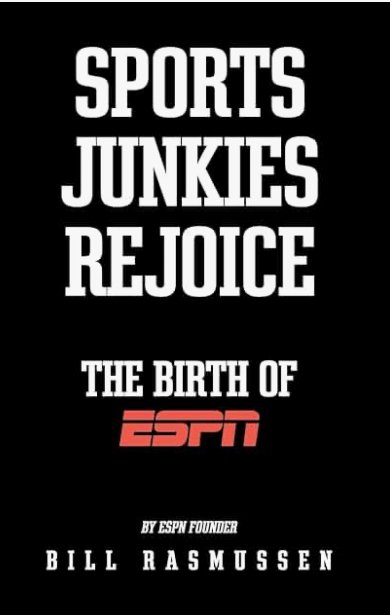
Bill Rasmuessen’s first book
New release in 2026
with audible version.
ESPN has shaped the landscape of my sports imagination for decades, long before I set foot in the Walter Cronkite School of Journalism and Mass Communication. This semester shifted that relationship from familiar to profoundly analytical. I no longer encounter ESPN as a viewer; I handle it every day as a subject of inquiry, a living case study in strategic communication and brand power.
Approaching the network through an academic lens revealed a level of intention and sophistication that is easy to miss from the outside. ESPN does not simply broadcast sports—it curates a global identity. Its messaging is disciplined, its credibility meticulously protected, and its strategic consistency almost architectural. You can feel the structure beneath the storytelling.
That understanding deepened when I spoke directly with the people who built the empire. George Grande, the first face ever to appear on ESPN and the original voice of SportsCenter, described a startup atmosphere where intuition and risk shaped every decision. Mike Soltys, who guided ESPN’s public relations strategy for forty-three years, explained the relentless precision required to uphold a brand recognized on every continent. And Bill Rasmussen, the visionary founder whose radical idea of a 24-hour sports network redrew the media map, offered an account of innovation so audacious it still feels modern.
Their insights transformed theory into lived history. They revealed how a company that began as an improbable experiment became a global authority in sports culture, and how its communication practices continue to evolve in an era of streaming wars, shifting audiences, and digital acceleration.
Experiencing ESPN both personally and academically has given me an entirely new vantage point. I now see not only how the brand endures, but why: its commitment to innovation, its mastery of narrative, and its ability to communicate with extraordinary clarity in a world crowded with noise. It is a standard-setter because it treats communication not as a function but as a force.
Bill Rasmussen is indeed recognized as a significant innovator, particularly for his role in founding ESPN, the first all-sports television network. Launched in 1979, ESPN changed the landscape of sports broadcasting by providing continuous coverage of sports events, analysis, and commentary. His innovative vision helped create a new genre in television and transformed how sports are consumed by audiences around the world.
If you would like to know more about his impact, career, or specific contributions, feel free to ask!
Bill Rasmuessen, Founder of ESPN
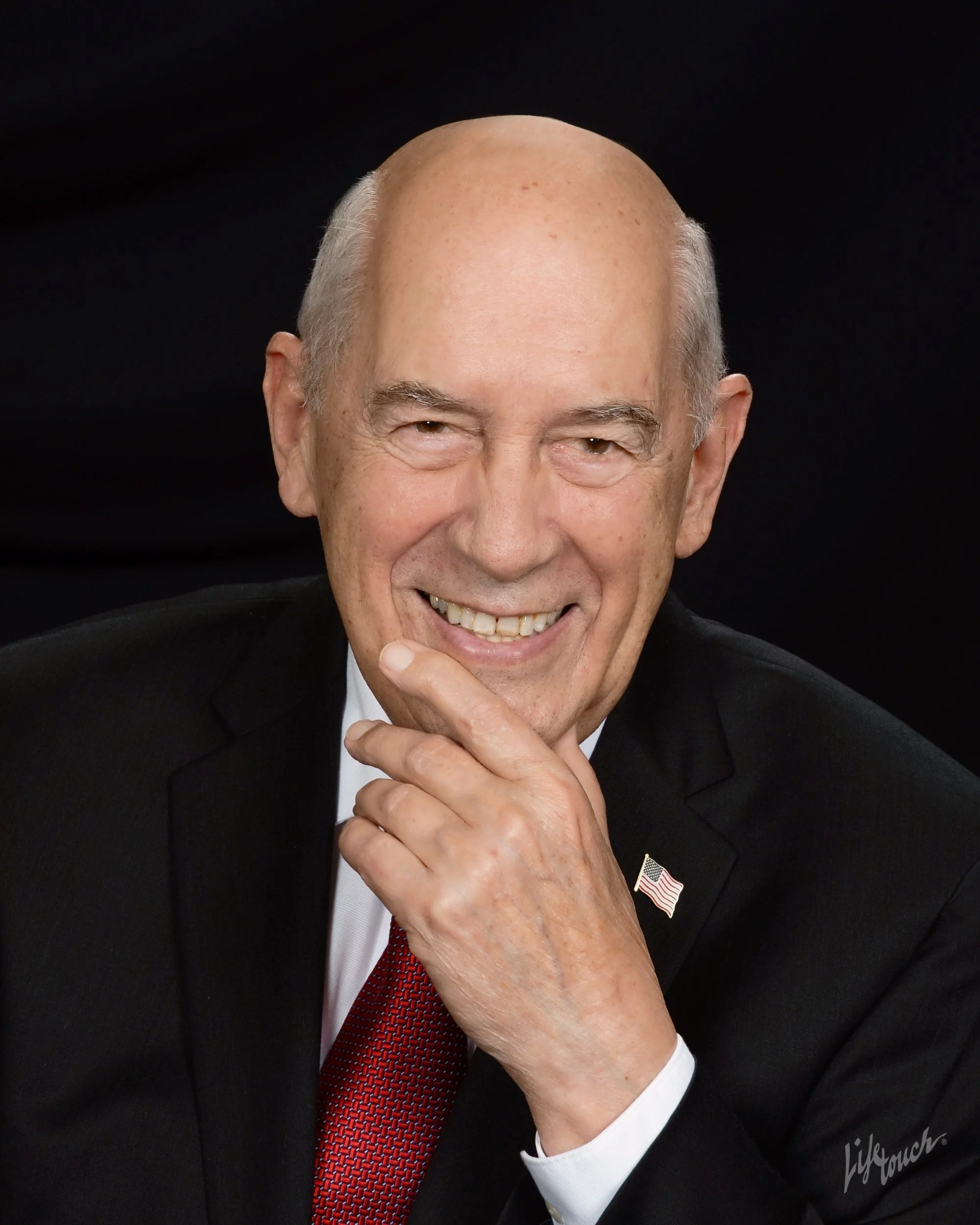
Nov. 14, 2025, on Zoom, Portion of Interview with Bill Rasmussen,
Discussing beginning of ESPN.
George Grande, First SportsCenter Anchor on ESPN, 1979
George Grande is a storyteller in the purest sense —
a voice that has carried generations of fans through some of the most memorable moments in baseball, college sports, and the early days of ESPN. From anchoring the very first “SportsCenter” to calling games for the New York Yankees and Cincinnati Reds, George has always brought a rare combination of clarity, warmth, and genuine respect for the athletes and the audience.
Nov. 16, 2025, on Zoom, Portion of Interview with George Grande,
Discussing beginning of Sports Center.
Oct. 19, 2025, on Zoom, Portion of Interview with Mike Soltys,
Discussing his 43 years in
Public Relations at ESPN..
Mike Soltys is a longtime ESPN communications executive whose career with the network spans more than 43 years. Hired in ESPN’s earliest days as founder Bill Rasmussen’s first intern, Soltys helped shape the company’s public image from startup to global sports media leader. Over four decades, he has led and guided countless PR initiatives, crisis responses, and major announcements, becoming one of the most respected and enduring figures in sports media public relations. Now, Mike is developing the documentary about ESPN’s beginnings.
Mike Soltys, 43 year PR career at ESPN, now documentarian.

Matt Barrie, ESPN Sportscaster
Interview with Matt Barrie
SportsCenter Anchor; College Football Studio Host and Commentator
Walter Cronkite School of Journalism and Mass Communication Graduate
First Spark
What’s your earliest sports memory that made you fall in love with the game—and does it still influence how you cover sports today?
I’m assuming “the game” is college football? But if it means sports in general, it’s still applicable. I grew up in Scottsdale and played pop warner and little league baseball. But football was my love. We didn’t have an NFL team at the time, and parents had season tickets to ASU football. So my Saturday’s as a kid were pop warner game in the morning. Notre Dame football in the afternoon on TV, and then off to Sun Devil stadium to tailgate with my parents, their friends, and watch the Sun Devils play. I remember how special Saturdays were to me. And that continues today.
The ESPN Effect
When you first joined ESPN, what was the moment you thought, “Wow, I’ve made it”?
I never think ,”I’ve made it.” Once your mind goes there you stop working hard and can lose motivation to be better. I have had a couple moments when I was thinking “wow, this is pretty cool, I’m doing this at ESPN.” One was in 2015 when we first started taking SportsCenter on the road, and I would be paired up at the College Gameday site each Saturday. And I was hosting SportsCenter AM, with the college gameday crown behind me, and sitting on set with Kirk Herbstreit talking CFB in a setting I grew up watching. The other, is when I started hosting coverage at the Masters. It’s a special place I look forward to every April.
Game Day Rituals
Before the red light goes on in the studio, do you have any quirky rituals or habits that
get you in the zone?
I really don’t. I’m prepared, so I’m confident. And most of the time I’m talking and joking with my co-anchor analysts, as the director is counting down: 3….2….1 in my ear.
Fan vs. Professional
How do you balance being a true fan of the game while keeping your cool as a journalist, especially during unforgettable moments?
There’s a fine line. I’m very aware that we should be considered an extension of the fan. Because we’re all sports fans at ESPN. It’s why we got into the business. However, I’m very mindful of not being a cheering fan boy while I’m working. There are times to have fun, and everyone knows that I went to Arizona State. But my job is to inform and entertain. Not cheer.
Unforgettable Interviews
Which interview or on-air moment has stuck with you the most—and what did it teach you about people, not just athletes?
I’ve been fortunate to do a lot of interviews with interesting people in my time at ESPN. One of the most memorable was getting David Letterman’s first TV interview after he retired from late night television. We took SportsCenter to the 100th Indianapolis 500, and Letterman was there as a team owner of Letterman-Rahal racing. I had our show staff ask for Letterman, not thinking in a million years that he’d say yes. And he did. Interviewing one of the most famous interviewers ever, will always be a milestone to me. He was candid. Funny. And insightful. Career moment for me.
If You Could Call It…
If you could call or narrate any sporting event in history—even before your time—what would it be and why?
I would’ve loved to have been on the call of the 1997 Rose Bowl between ASU and Ohio St. Although it ended in heart break, being in the booth during an all-time classic like that would’ve been amazing.
Diversity in Sports Media
Sports are a mirror of society, and ESPN has a platform that reaches millions. How do you see diversity—on air and behind the scenes—shaping the way we tell stories in sports today?
I believe that everyone should have the opportunity to work in a space that they are passionate about and qualified for. There are so many people with unique backgrounds and abilities. And if they are qualified to work in a network TV capacity, it only enhances our coverage and perspectives at ESPN.
Behind-the-Scenes Blooper
Can you share a time when something went totally wrong on air, but you pulled it off so smoothly that no one at home even noticed?
There have been multiple times where haven’t had shot sheets for highlights and just winged it. And I’ve had my zipper down a few times while standing on camera and fixed it with no one noticing.
The Dream Show
If ESPN gave you one night to host any type of show, no rules, what would you create
An all day, college football show on site at the biggest game that week. Do a show every Friday in a “CFB Tailgate” vibe. Then on Saturday, our entire wrap up show (College Football Final) on the field from the biggest game while doing halftimes, etc of the games on ESPN. Then during golf season, be at the biggest tournament Mon – Wed with live guests and shows from outside the clubhouse with a laid back cocktail country club feel.
Looking Back, Looking Ahead
If you could sit down with 12-year-old Matt, watching SportsCenter with wide eyes, what advice would you give him now?
To enjoy the journey. To not get caught up in things beyond your control. And to maintain the perspective that one day you will have your dream job and be grateful every day for that opportunity.
ESPN Media Backgrounder
Overview
ESPN is the world’s leading sports media brand, with dominance across television, digital, and social platforms. Its parent company, The Walt Disney Company, has positioned ESPN as a central player in global sports broadcasting, streaming, and advertising. ESPN reaches hundreds of millions of fans through live event coverage, digital products, and original content, and continues to expand influence through high-value rights deals and social media leadership.
Company Fact Sheet
• Founded: 1979, Bristol, Connecticut
• Headquarters: Bristol, CT, and New York, NY
• Parent Company: The Walt Disney Company (80% ownership; pending 10% NFL equity stake)
• Employees: ~4,000 worldwide
• Global Reach: Available in 200+ countries and territories
• Networks & Platforms: ESPN, ESPN2, ESPN+, ESPN Radio, ESPN Deportes, SEC Network, ACC Network, ESPNU
• Subscribers: 25+ million ESPN+ direct-to-consumer subscribers (Disney, 2025)
• Revenue Streams: Subscription fees, advertising and sponsorships, streaming subscriptions, licensing, data products, and partnerships
Resources Audit
ESPN maintains multiple media kits across Disney Advertising and sport-specific networks such as SEC Network and ESPN International. These kits include advertising decks, high-quality images, and promotional materials aimed at press outlets and commercial partners. While visually consistent with ESPN’s branding, the kits lack centralization, with multiple “press room” portals offering overlapping resources. A consolidated press hub with clear taxonomy would reduce redundancy and improve usability (ESPN Press Room, 2024).
Social Media Analysis
ESPN is the most-followed sports media brand on social platforms.
• In February 2025, ESPN became the first sports property to surpass 1 billion social media actions in a single month, topping Comscore rankings for the 44th consecutive month (Barrett Media, 2025).
• ESPN digital and social platforms drew 200 million unique users that month, representing 71% of U.S. adults (Barrett Media, 2025).
• By mid-2025, ESPN maintained a 69.1% U.S. adult reach with over 555 million monthly engagements (Stephens, 2025).
The tone of ESPN’s platforms varies by audience: TikTok and Instagram emphasize viral moments and memes, X focuses on breaking news, and YouTube delivers long-form analysis. Growth opportunities include expanding coverage of niche sports, enhancing storytelling during off-peak periods, and fostering two-way audience interaction.
Traditional Media Analysis
Mainstream outlets such as The New York Times and USA Today, alongside industry publications like Sports Business Journal, regularly cover ESPN’s strategies, rights negotiations, and leadership shifts. Sentiment remains mixed: outlets highlight ESPN’s innovation in streaming while critiquing restructuring and financial pressures (Sports Business Journal, 2025b). Strategic storytelling around philanthropy and community engagement could balance narratives and improve ESPN’s public perception.
Streaming and ESPN+
Launched in 2018, ESPN+ has become the cornerstone of Disney’s direct-to-consumer sports strategy. By 2025, it had surpassed 25 million subscribers, fueled by exclusive UFC fights, NHL out-of-market games, international soccer, and original programming. ESPN+ positions the network for long-term growth as audiences shift from cable to streaming (Disney, 2025).
Global Footprint
ESPN’s influence extends beyond the U.S., with distribution in over 200 countries and territories. ESPN International operates localized networks in Latin America, Europe, and Asia, often partnering with regional broadcasters such as BT Sport in the UK. This international presence reinforces ESPN’s global brand leadership.
Growth and Partnerships
• NFL equity deal: In August 2025, the NFL agreed to take a 10% equity stake in ESPN (valued at $2–3 billion) in exchange for media assets including NFL Network and RedZone (Associated Press, 2025; Washington Post, 2025).
• MLB agreement: ESPN and MLB reached a three-year framework agreement for out-of-market streaming rights, following ESPN’s opt-out of its $550 million/year national TV deal (Sports Business Journal, 2025a; Awful Announcing, 2025).
• WWE streaming: ESPN signed a $1.6 billion streaming partnership with WWE in 2025 (Reuters, 2025).
Viewership Milestones
• Women’s NCAA Final 2024: Iowa vs. South Carolina averaged 18.9 million viewers, the most-watched college basketball game ever (Nielsen, 2024).
• WNBA 2024 season: ESPN averaged 1.2 million viewers per game, a 170% increase from 2023 (ESPN Press Room, 2024a).
• UFC 300 prelims: ESPN recorded 1.86 million viewers, making it the most-watched UFC prelims on ESPN platforms (TKO Group, 2024).
Leadership and Key Voices
• Jimmy Pitaro: Chairman, ESPN
• Burke Magnus: President, Content
• Laura Gentile: Executive Vice President, Commercial Marketing, Disney Advertising
• David Roberts: Head of Event & Studio Production
Corporate Social Responsibility
ESPN integrates community impact into its brand identity. Signature programs include:
• V Week for Cancer Research in partnership with the V Foundation, raising millions annually.
• ESPN Citizenship, which supports youth sports, education, and inclusion initiatives.
• Sports Humanitarian Awards, celebrating athletes and teams making social impact.
These efforts reinforce ESPN’s reputation beyond broadcasting, demonstrating commitment to communities and causes.
Key Takeaways
• ESPN dominates sports media across television, streaming, and social platforms.
• ESPN+ anchors the brand’s transition into direct-to-consumer digital distribution.
• A global reach ensures brand visibility beyond the U.S. market.
• Partnerships with the NFL, MLB, and WWE enhance financial strength and rights control.
• Record-breaking viewership milestones confirm cultural influence.
• CSR initiatives demonstrate ESPN’s role as a socially responsible brand.